EN 280 and CE Marking: What to Check Before Buying a Scissor Lift for Europe
· Three Points
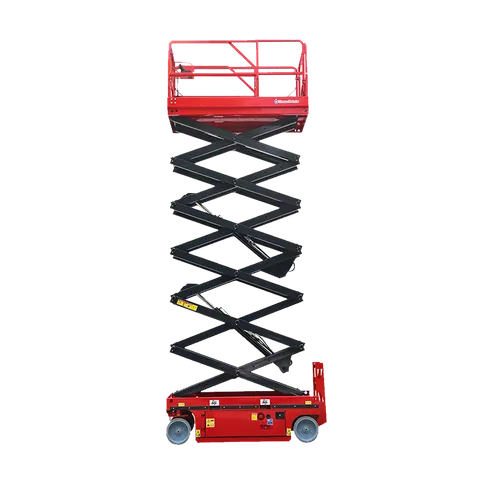
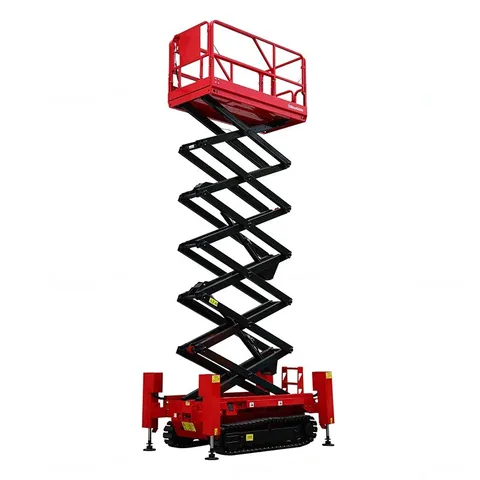
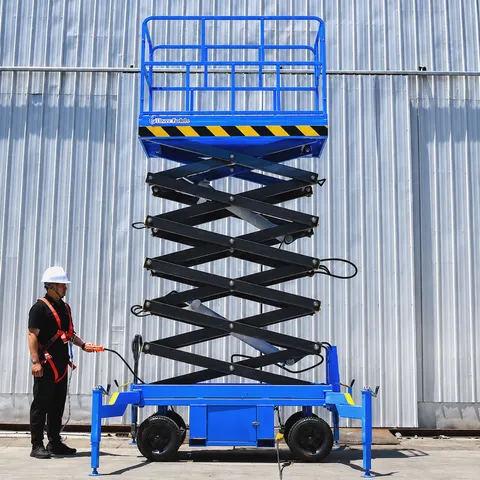
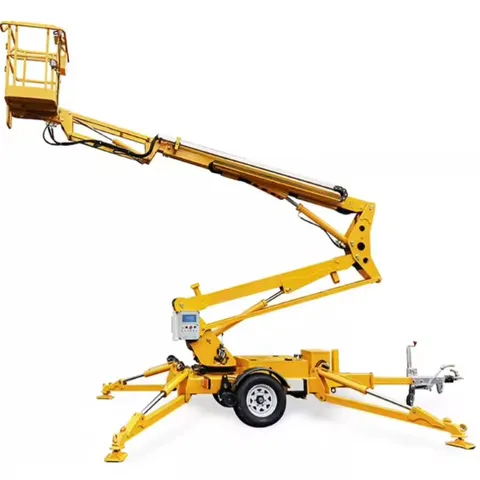
Scissor lifts and boom lifts belong to a group of machines called mobile elevating work platforms, or MEWPs. Because they lift people, they are among the more closely regulated machines in Europe. If you import or buy one for use in the EU, you need to know which rules apply, which standard the machine should be built to and which documents prove it. This guide summarises the essentials. It is general information, not legal advice; for a specific machine, check with your notified body or a CE consultant.
The legal framework: Machinery Directive and Machinery Regulation
Today, MEWPs placed on the EU market must comply with the Machinery Directive 2006/42/EC and carry the CE mark. From 20 January 2027 the directive is replaced by the Machinery Regulation (EU) 2023/1230, which applies directly in every member state. The core idea stays the same — the manufacturer must meet the essential health and safety requirements, document how, and declare conformity — but the regulation updates several points, including digital instructions and the treatment of safety software. Machines delivered after that date need documentation that refers to the new regulation.
Machines for lifting persons where there is a risk of falling more than three metres are listed in Annex IV of the Machinery Directive, the list of higher-risk machinery. For these machines the manufacturer can use internal production checks only if the machine is built fully to harmonised standards covering all relevant requirements. Otherwise a notified body must be involved, either through an EC type-examination or a full quality assurance system.
What EN 280 covers
EN 280 is the European standard for the design and testing of MEWPs. The current edition, EN 280-1:2022, covers design calculations, stability, construction, safety devices and the examinations and tests a machine must pass. It replaced EN 280:2013+A1:2015, which stopped giving presumption of conformity in February 2025. A companion part, EN 280-2:2022, adds requirements for load-lifting appliances fitted to a platform, for example a hoist used to lift panels.
In practice, a machine built to EN 280-1 has been checked for stability with its rated load in the worst positions, for structural strength with an overload, and for the behaviour of its safety systems. Typical requirements include protection against overload, tilt warnings and travel limits, guardrails and gates, emergency stop, and a way to lower the platform if power fails.
Documents to ask your supplier for
- EU Declaration of Conformity: names the manufacturer and its address, identifies the model and serial range, lists the directive or regulation and the standards applied (look for EN 280-1:2022), and is signed by a responsible person.
- Certificate from a notified body, if the manufacturer used EC type-examination or full quality assurance — check the notified body number in the European Commission's NANDO database.
- CE marking and a data plate on the machine showing manufacturer, model, serial number, year, rated load, maximum number of persons and wind rating.
- Instructions for use and maintenance in the official language of the country where the machine will be used.
- Test records for the individual machine, such as load and function tests carried out before shipment.
Be careful with "certificates" that only state a factory was audited or that a product was checked on a voluntary basis. They can be useful, but they do not replace the declaration of conformity and, where required, a notified body certificate. The name on every document should match the company that actually manufactures and supplies the machine.
Who is responsible in the EU?
When a machine is made outside the EU, EU market surveillance rules require an economic operator established in the EU — the importer or an authorised representative — whose details appear on the product or its documentation. The importer must check that the manufacturer has carried out the conformity assessment, that the CE mark and instructions are present, and must keep the declaration of conformity available for the authorities. Agree in writing with your supplier who takes on this role before the first shipment.
After delivery: inspection and training
CE marking covers the machine as it leaves the factory. Once it is in use, national rules apply: most EU countries require regular thorough examinations of lifting equipment by a competent person, and operators must be trained. Schemes such as IPAF operator training are widely recognised across Europe. Keep the instructions, inspection records and spare-parts information with the machine.
Quick checklist
- The declaration of conformity names the real manufacturer and lists EN 280-1:2022.
- The conformity route matches the machine: harmonised standard fully applied, or a valid notified body certificate.
- The CE mark and data plate are on the machine.
- Instructions are supplied in your language.
- An EU importer or authorised representative is identified.
- From 20 January 2027, documents refer to Regulation (EU) 2023/1230.
Ask us for the documents that apply to the model you are interested in, and we will send them with your quotation so you can check them before ordering.