Structural Principle of a Scissor Lift
Core structure composition
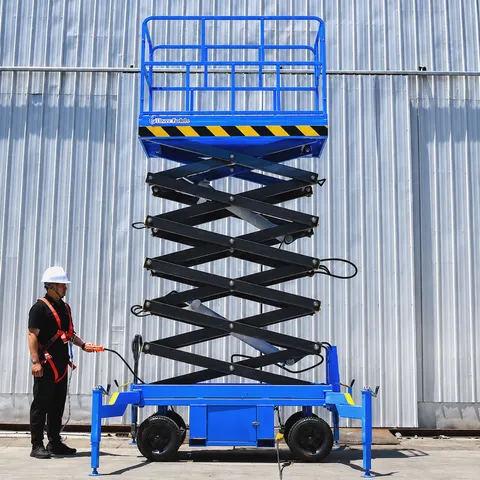
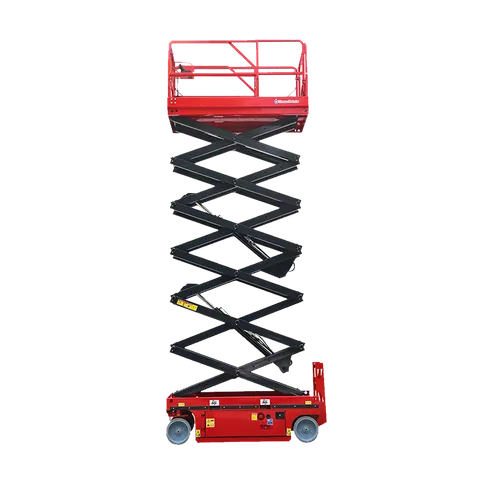
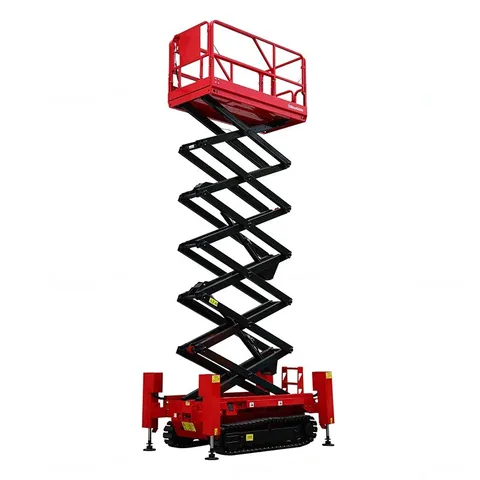
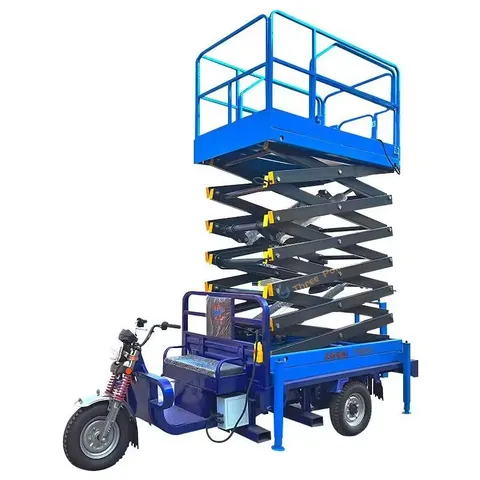
A scissor lift is built from four main systems: the mechanical structure, the power system, the controls and the safety system
Mechanical structure: the core is a stack of scissor arms in high-strength manganese steel, pinned together into an X-shaped support and mounted between a base frame and the work platform; mobile models also add wheels and steering. Power system: usually hydraulic, with a power pack and lift cylinders, although some small units use a stepper motor and lead screw. Controls: a PLC, push buttons and a remote handset give precise start, stop and speed control. Safety system: pressure-relief valve, pilot-operated check valve, limit switches, a fall-arrest clamp and other devices keep the machine safe even in an emergency.
Working principle
The platform goes up and down as the scissor arms open and fold. On hydraulic models the motor drives the pump, turning mechanical energy into oil pressure. Pressurised oil flows through the valve block into the cylinder, pushing the piston rod out or drawing it in and moving the arm pivots outward or inward. That horizontal push becomes vertical lift, so the platform rises or lowers smoothly. Screw-driven versions use a stepper motor to turn the screw; the nut slides along it, opening or closing the arms to raise the platform. Here too the pressure angle is controlled at the design stage to avoid wasting power.