Working Principle of a Scissor Lift
Core mechanical principles
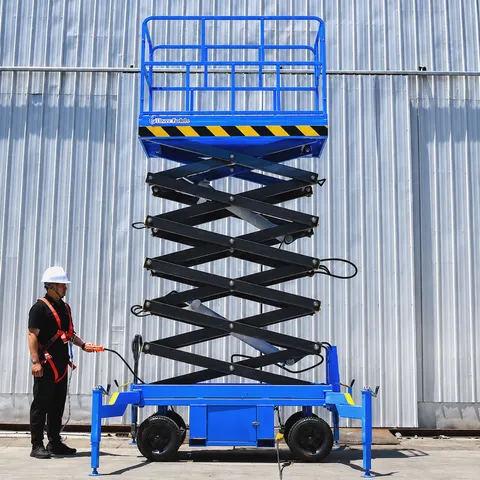
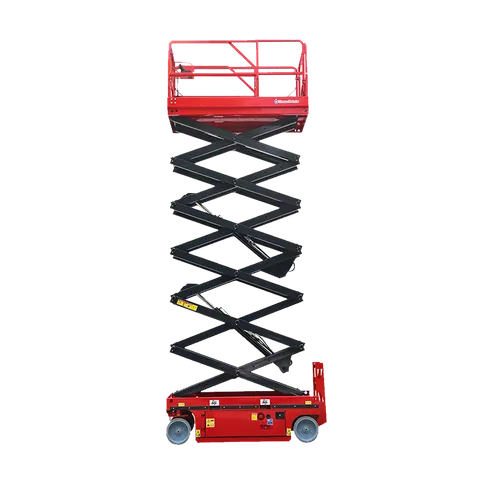
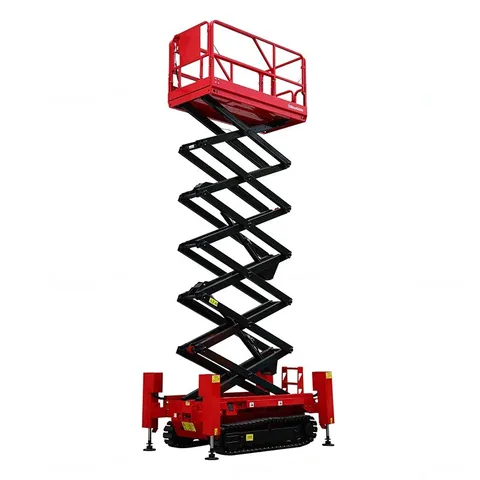
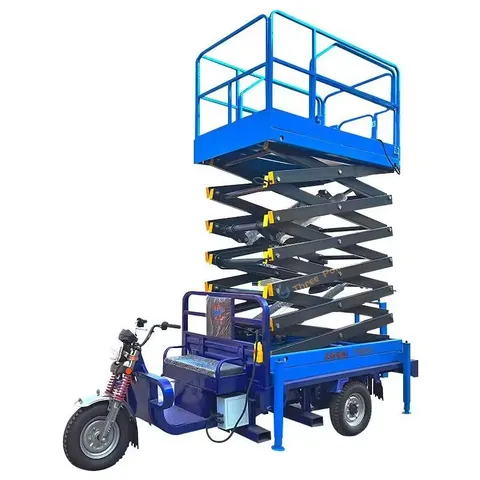
A scissor lift raises and lowers its platform using crossed arms arranged in an X pattern. Pairs of steel members are joined by pivot pins to form an extending scissor stack. When the drive pushes the pivot points apart or draws them together, that sideways force becomes vertical lift, and the platform stays level throughout. Because the arms act as levers and multiply the drive force, a modest power unit can lift a heavy load.
Mainstream power drive principle
Hydraulic drive (by far the most common): an electric motor runs a pump that pressurizes oil. The oil passes through solenoid and flow-control valves into the lift cylinder, extending or retracting the piston rod and moving the scissor arms. On the way down, oil returns to the tank through the valve block, where a counterbalance valve holds the flow steady so the platform cannot drop if the load changes. Screw drive: a stepper motor and gearbox turn a lead screw; its nut travels sideways and opens or closes the arms. Designers keep the mechanism's pressure angle under control so that power is not wasted.